Can a model read what two rivals argued, and not just how they wrote?
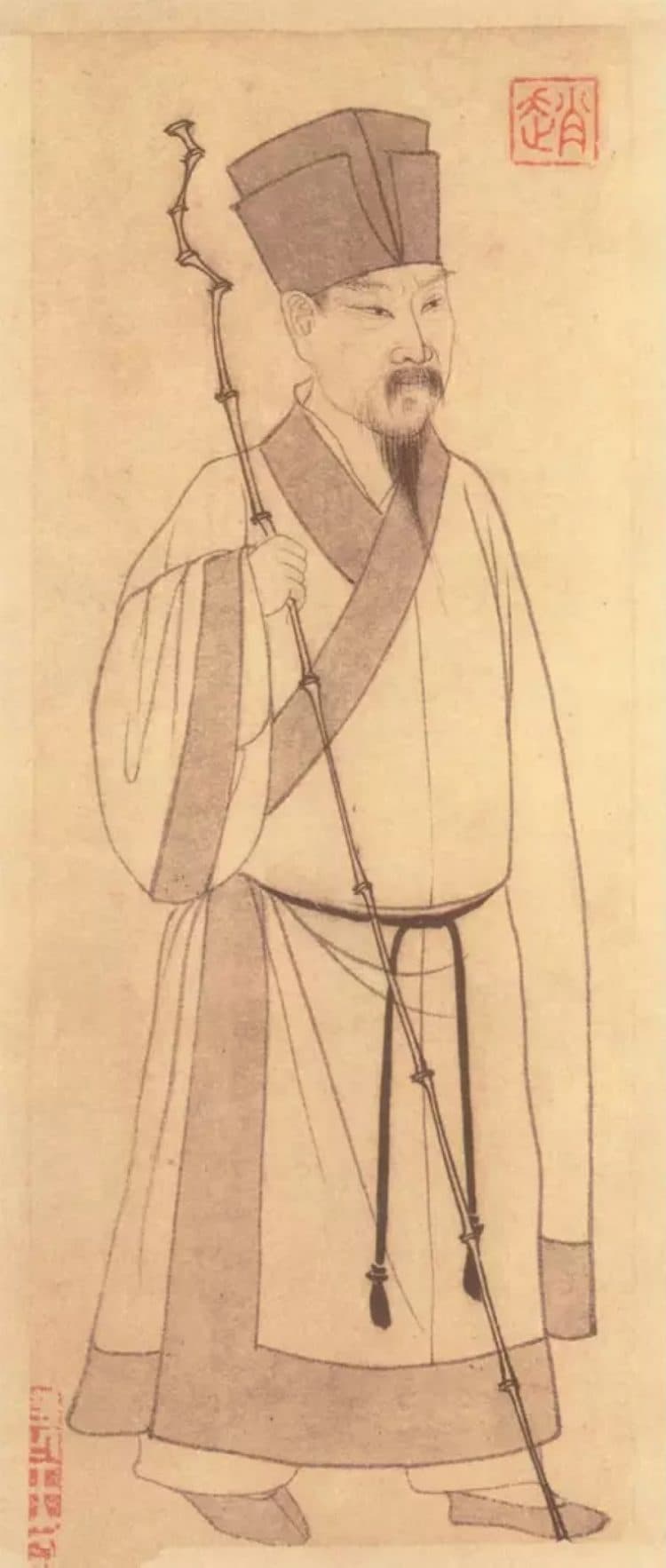
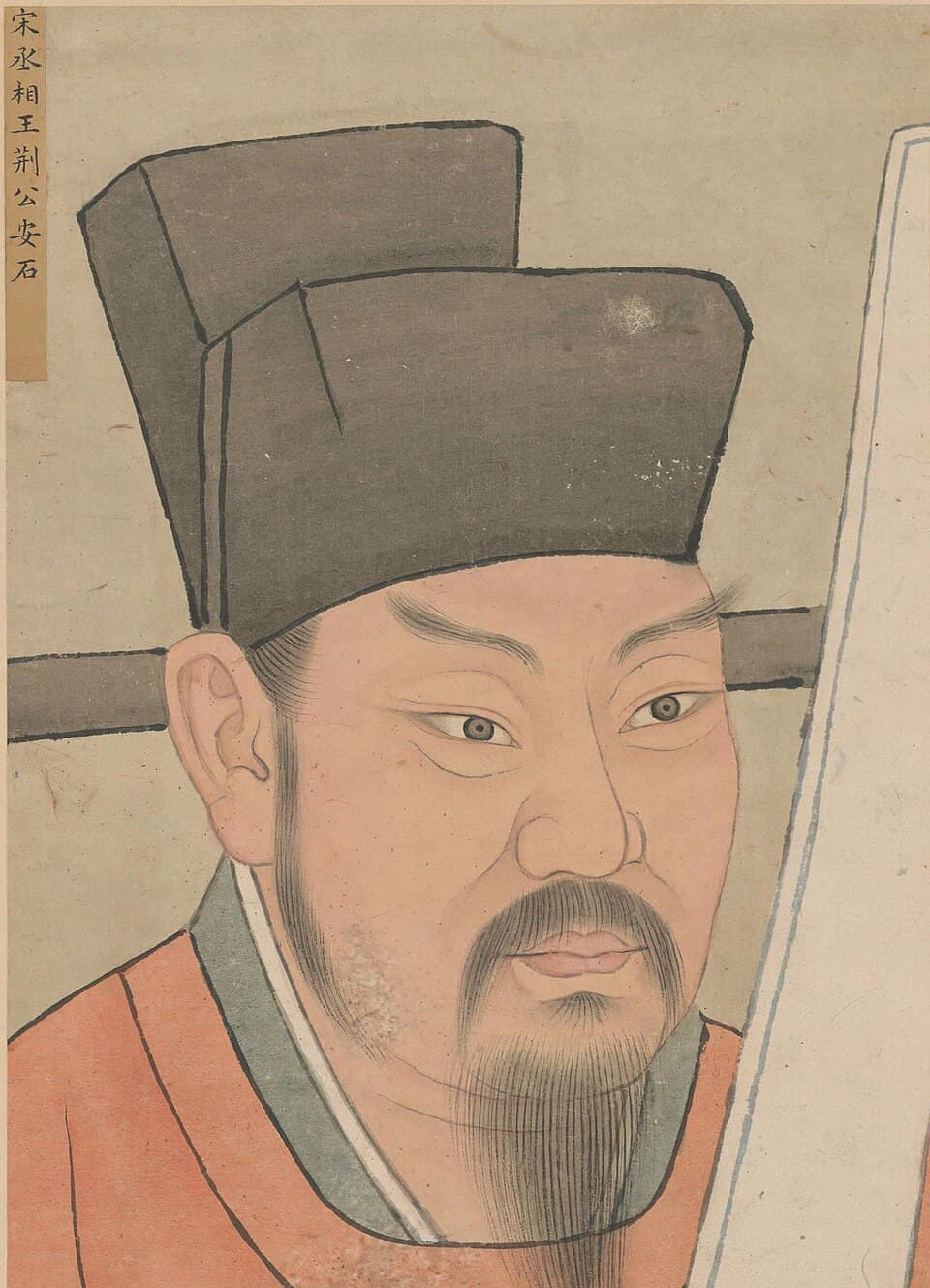
Su Shi and Wang Anshi were rivals at the Song court in the eleventh century. Wang Anshi led the reforms called the New Policies; Su Shi wrote against many of them. Both left essays and memorials on the same questions of government. A historian who reads them can say where the two men stood and where they parted. We want to know whether a language model, reading the same texts, holds that difference somewhere inside it, and whether we can find the place and read it.
The catch is that the two men also wrote differently. Anything that tells their texts apart might be picking up the prose and not the argument. So the question is not whether a model can tell Su Shi from Wang Anshi, which is easy, but whether what it notices can be split into the part that is about what they argued and the part that is about how they wrote.
The question
Why look inside a model
When an expert reads a page, something happens that we cannot watch. They notice what is said between the lines, they recognize a position from a turn of phrase, they connect this memorial to that debate. We only see the interpretation that comes out. The process stays shut.
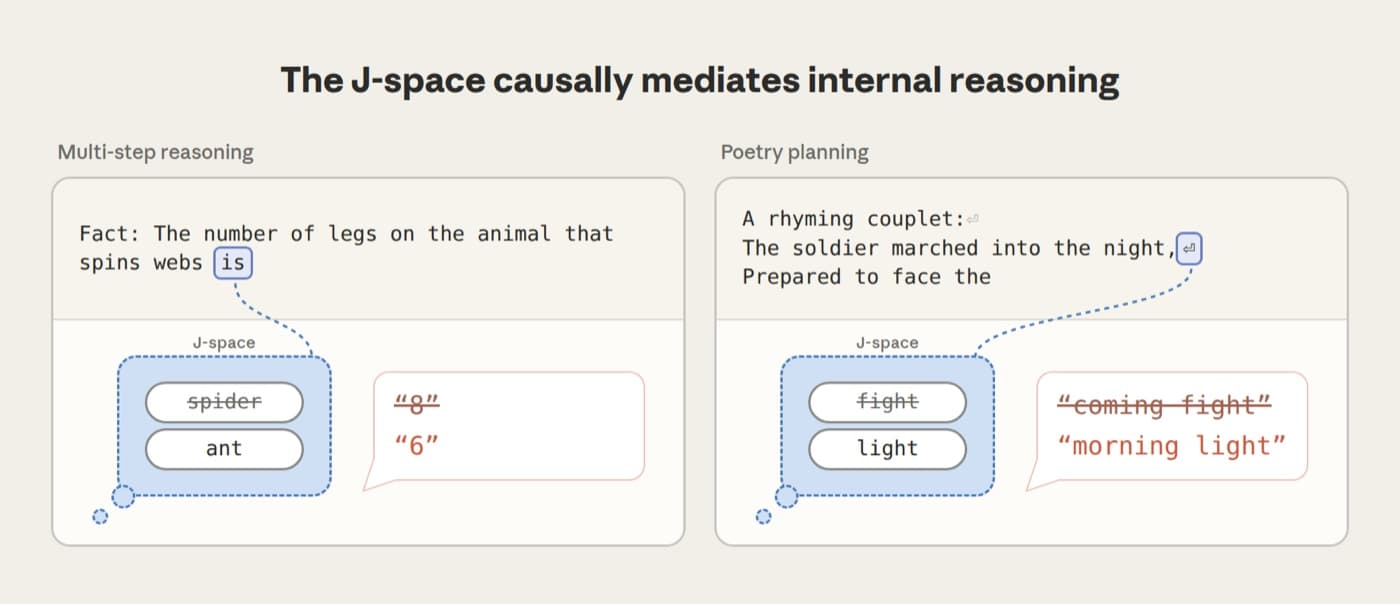
A language model reads the same page and also produces an interpretation, and its reading can be good. The difference is that its process is open. As the model reads, every character sets off activity inside it, and that activity can be broken into units that each respond to one kind of thing: a character, a turn of phrase, a subject, perhaps a position. Each unit can be opened to see which lines of the corpus it responds to. Recent work reports that a model keeps a set of such internal representations it is ready to put into words, which is close to saying that what the model has in mind as it reads can be read off.[1] That is what this page tries to do with two men and their texts.
Ways of reading text by computer
Three generations of computational reading come before this one. Each reads more deeply than the last and shows less of how it read; what separates them is what is taken out of the model. The last row is the approach this study takes.
| Approach | Reads out | Misses |
|---|---|---|
| Word countsTF-IDF, topic models, stylometry | Which words appear | Same words, opposite arguments |
| Embeddingsword2vec, BERT | One vector per passage | How two passages differ |
| Prompting a modelAsking it to compare or label | Generated text | How the answer was reached |
| Mechanistic interpretabilityThis study: transcoders, the Jacobian lens | Readable features | Whatever the dictionary cannot rewrite |
Where this study sits
This study belongs to a fourth line of work, called mechanistic interpretability, which tries to describe what a model computes on its way to an answer in units a person can read. Its main tool is sparse dictionary learning, in the form of a sparse autoencoder or a transcoder: a stand-in for one layer of the model, trained so that the layer's dense, unreadable activity is rewritten as a short list of readable parts, each of which is on or off for a given character. The parts are the features. The dictionaries used here are transcoders, one per layer of the model, published for Gemma-3-27B-IT in two sizes and for Qwen3-14B in one.[5, 6, 7]
The idea is to keep the third generation's depth of reading, since the features are taken from a large model as it reads the text, and to recover the first generation's transparency, since each feature can be opened and checked against the lines it fires on. This line of work grew up inside AI research, where it is used to understand and audit models. Here it is turned on a historical question.
Question 1: the method
Can a language model, used as an instrument, measure the difference in stance between two opposed writers apart from the difference in their style and vocabulary?
Telling the two men apart is not the hard part. Character frequencies alone go a long way, because each man had his habits. The hard part is to take the difference a model finds and separate the share that follows what they argued from the share that follows how they wrote. Everything in the method below is built around that separation.
Question 2: the history
On the questions they both addressed, along which ideas did Su Shi and Wang Anshi part, and does the difference survive when genre and date are held fixed?
The two men are the case study. Their quarrel over the New Policies is one of the best documented in Chinese history, which makes it a test the method can be held to: if it finds stance at all, it should find the oppositions historians already know. What the method can deliver is the dimensions along which the two men part and how far. Why they parted is a historian's question, answered by putting the result back into its time.
- The Green Sprouts loans
- The state as manager of wealth
- How reform should proceed
- Restoring ancient institutions
What makes this hard
Style and stance travel together
Take the pair of passages shown further down, both about the Green Sprouts loans, the scheme under which the state lent money or grain to farming households in spring and collected it with interest after the harvest. Wang Anshi writes that the poor used to borrow from rich families and now borrow from the government at lighter interest. Su Shi writes that officials who fail to collect will be punished, so they will force the loans on households whether they want them or not. A feature that responds to the subject, lending to farmers, fires on both passages. A feature that follows the stance fires on one side and not the other. And a feature that responds to the prose of a memorial addressed to the emperor fires on both, because both passages are memorials.
Now change the genre. Much of Su Shi's surviving prose is examination writing: essays and policy answers written for the civil service examinations and in their manner. Much of Wang Anshi's is letters and records. A feature for examination prose fires wherever Su Shi writes and seldom where Wang Anshi does. It separates the two men perfectly and says nothing about what either thought. Comparing the two men alone cannot tell this feature from a stance feature, because in that comparison the author, the style and the stance all change at once.
The way out is to compare passages that differ in only one of these. The two men shared a classical education and agreed on more questions than they fought over, so there are many pairs of passages in which they take the same side. In such a pair the author and the style differ and the stance does not, so whatever separates the passages comes from style. Pairs where they disagree add stance on top. The difference between the two kinds of pair is where stance lives.
Does the dictionary read classical Chinese?
Even if the model reads classical Chinese well, the dictionary that turns its activity into features might not. The dictionaries were trained on the modern web. Whatever part of a layer's work the dictionary cannot rewrite in its own parts is left as an error term, and that part is invisible to us even though the model did compute it. The measure of this is variance explained: the share of the layer's activity that the dictionary reproduces.
The risk is worst where it matters most. A feature for a position is an abstract thing, and abstract things are expected in the deeper layers. If the dictionary gives out there on classical text, the study could find style features in the shallow layers and miss stance features in the deep ones, and conclude wrongly that there is nothing but style. So before anything else, the dictionary is checked layer by layer against the same amount of modern Chinese and English.
The check finds the problem. With the smaller 16k dictionary, the classical sample is reproduced almost completely at layer 9, at 98 percent, and only 20 percent at layer 60, against 31 percent for modern Chinese at the same depth. The wider 262k dictionary recovers much of the loss: at layer 60 it reproduces 51 percent of the classical sample against 58 percent of the modern one.
- rewritten as features
- left as the error term
- Classical Chinese98%
- Modern Chinese65%
- English99%
- Classical Chinese20%
- Modern Chinese31%
- English56%
Every label is an interpretation
Two kinds of judgment sit underneath the measurement, and both are interpretations that someone has to make. The first is the pairing itself: which two passages address the same question, and whether their authors take the same side. If a model makes that call, the study measures a model against standards a model set, and the circle has to be acknowledged and, as far as possible, broken. The second is the meaning of a feature. A feature is a column of numbers; saying what it responds to means reading the lines on which it fires most and naming the common thread, and two readers can name it differently. The study reads each feature from its top lines, reads it a second way with a lens described below, and reports how often the readings agree.
A third interpretation waits at the end. Even a feature that clearly follows stance is not yet a concept from the history of ideas. Saying that it tracks, for example, the debate over whether the state should manage wealth is a claim that needs its own evidence.
Texts and pairs
The texts
The texts are the prose the two men wrote themselves, line by line, with commentary and later editorial matter left out. Four more authors are read beside them as comparisons: Su Zhe and Ouyang Xiu from the same generation, and Han Yu and Liu Zongyuan from the Tang. Su Zhe matters most. He was Su Shi's younger brother, trained in the same house, and his prose is the closest to Su Shi's of anyone's. A difference between the brothers is about as free of style as a difference between two authors can be.
The two corpora are not alike. Su Shi's 164 works run to 5,905 lines; Wang Anshi's 100 works to 2,212. Of Su Shi's works, 95 are examination pieces: policy answers, examination essays and essays in their manner. Of Wang Anshi's, 55 are letters and records. The genre imbalance is exactly the kind of difference the method has to see past. The dates of the works are not yet in the data, so the distribution by date, and the control for date that question 2 asks for, come later.
- Su Shi
- 164 works, 5,905 lines
- Wang Anshi
- 100 works, 2,212 lines
| Essay (論) | 50 12 |
|---|---|
| Letter (書) | 22 33 |
| Record (記) | 26 22 |
| Examination essay (試論) | 20 7 |
| Policy answer (策) | 25 0 |
| Preface (序) | 8 12 |
| Memorial to the throne | 11 6 |
| Biography (傳) | 2 3 |
| On the origin of (原) | 0 2 |
| Explanation (說) | 0 2 |
| Exposition (解) | 0 1 |
Pairs of passages
The unit of measurement is a pair: two passages by two different authors on one question, labelled by whether the authors take the same side or opposite sides. In a same-stance pair, the passages differ in author and style and agree in stance, so the gap between them is style. In a different-stance pair the gap is style plus stance. A feature whose gap grows only in the different-stance pairs is a candidate for a stance feature.
Su Shi against Wang Anshi is the central pairing. Around it are pairs that cross each man with Su Zhe, Ouyang Xiu and the two Tang authors, so that a stance feature found between the rivals can be checked on authors it was not found on. The pair between the two brothers is the sharpest check, since so little style separates them.
Whether a pair is same-stance or different-stance is judged by several models that see only the two passages in the original, with no author, title or explanation, and a pair is used only when a majority of them agree. The pairs on which every model agrees are reported as a stricter subset. If the judges were wrong at random, the two kinds of pair would simply blur together and the signal would shrink. The dangerous error is a systematic one: if the judges tend to call a pair opposed whenever its vocabulary differs, vocabulary features would start to look like stance features. So the surface difference between the passages, measured on character counts, is matched between the two kinds of pair before anything is compared. Passage length is matched the same way, and pairs drawn from the same work are grouped so that one long essay cannot count many times over.
For question 2, the memorials the two men wrote on the New Policies are gathered separately. They share a genre, but not a date; the dates are recorded alongside. A result is believed only if it holds up when the data are split, when the author pairing changes, and when the whole procedure is repeated on a second model with its own dictionary.
Does government lending to farm households in spring, repaid with interest after harvest, benefit the peasants, or will it inevitably harm them?
去歲諸軍之始並也,左右之人,皆以士心樂並告陛下。
Last year, when the armies were first merged, those around you all told Your Majesty that the soldiers were glad of it.
近者放停軍人李興,告虎翼吏率錢行賂以求不並,則士卒不樂可知矣。
Recently the discharged soldier Li Xing reported that the clerks of the Huyi corps had collected money to buy their way out of the merger; so one can tell the soldiers were not glad.
夫諂諛之人,茍務合意,不憚欺罔者,類皆如此。
Flatterers, who only seek to please and do not shrink from deceit, are all of this kind.
故凡言百姓樂請青苗錢,樂出助役錢者,皆不可信。
So whoever says the people gladly ask for Green Sprouts money, or gladly pay the service-exemption levy, is not to be believed.
陛下以為青苗抑配果可禁乎?
Does Your Majesty think the forced allotment of Green Sprouts loans can really be forbidden?
不惟不可禁,乃不當禁也。
Not only can it not be forbidden; it ought not to be.
何以言之?
Why do I say so?
若此錢放而不收,則州縣官吏,不免責罰。
If the money is lent and not recovered, the prefectural and county officials cannot escape punishment.
若此錢果不抑配,則願請之戶,後必難收索。
If it really is not allotted by force, then the households that asked for it will later be hard to collect from.
前有抑配之禁,後有失陷之罰,為陛下官吏,不亦難乎!
With a ban on forced allotment before them and a penalty for losses behind them, is it not hard to be Your Majesty's official?
故臣以為既行青苗錢,則不當禁抑配,其勢然也。
So I hold that once Green Sprouts money is issued, forced allotment should not be forbidden; the situation makes it so.
陛下即位五年,更張改造者數千百事,而為書具,為法立,而為利者何其多也。
In the five years since Your Majesty took the throne, hundreds and thousands of things have been reformed and remade, set down in writing, established in law, and how many of them have brought benefit.
就其多而求其法最大、其效最晚、其議論最多者,五事也:一曰和戎,二曰青苗,三曰免役,四曰保甲,五曰市易。
Among so many, the five whose laws are greatest, whose effects come latest and which are most debated are these: first the pacification of the frontier tribes, second Green Sprouts, third service exemption, fourth the baojia militia, fifth the market exchange.
今青唐、洮、河,幅員三千餘里,舉戎羌之眾二十萬獻其地,因為熟戶,則和戎之策已效矣。
Now in Qingtang, Tao and He, a territory of more than three thousand li, two hundred thousand of the Rong and Qiang have offered up their land and become settled households; so the frontier policy has already taken effect.
昔之貧者舉息之於豪民,今之貧者舉息之於官,官薄其息而民救其乏,則青苗之令已行矣。
The poor of former days borrowed at interest from powerful families; the poor of today borrow at interest from the government, which keeps the interest low while the people are relieved of their want; so the Green Sprouts decree is already in force.
Checks with a known answer
The pairs are the measurement; they are not a test of it. A test needs an answer known independently of the model, and there are two sources of those.
The first is a pair we make ourselves: a passage and its translation into modern Chinese. The stance is unchanged by construction and the style is changed completely. A feature that follows stance should survive the translation; a feature that follows style should not. The answer here is certain, but the translation is not the original, so what survives in a translated pair is evidence about the original only at one remove.
The second is a list of the oppositions historians already recognize between the two men in their memorials on the New Policies, closed before any measurement so that the measurement cannot shape it. The list below was assembled by a model from the two men's memorials; it stands as the fixed target for question 2, and a historian's review of it is listed under limits.
| Issue | Su Shi | Wang Anshi | Memorials |
|---|---|---|---|
| The Green Sprouts loans | Forced allocation follows and harms the farmers; the loans should stop | They replace usury and rescue the farmers | 再上皇帝書, 乞不給散青苗錢斛狀 / 上五事劄子 |
| The state as manager of wealth | Leave wealth with the people; the state should not pursue profit | The state should manage and increase its wealth | 擬進士對御試策, 乞不給散青苗錢斛狀, 上神宗皇帝書 / 乞制置三司條例, 上仁宗皇帝言事書 |
| How reform should proceed | Through the regular offices and the normal channels | Through a special bureau and the ruler's decision | 上神宗皇帝書, 擬進士對御試策 / 上仁宗皇帝言事書, 乞制置三司條例 |
| Restoring ancient institutions | Transplanting old institutions is needless and harmful; use people well instead | Old laws can be enacted by those who grasp their intent; the examinations must change | 議學校貢舉狀 / 上五事劄子, 上仁宗皇帝言事書 |
| The pace of reform | Mixed: at once for the service law, with care for the army | Mixed: gradually for the service law, decisively for the government | 論給田募役狀, 乞增修弓箭社條約狀 / 上五事劄子, 上時政疏 |
| Laws or the right men | Write safeguards into the law | More law will not do; the right men come first | 論給田募役狀 / 上仁宗皇帝言事書 |
| The grounds for remonstrance | Loyalty, even beyond one's office | The duty of one's office | 因擒鬼章論西羌夏人事宜劄子, 諫買浙燈狀 / 進戒疏 |
| Central power | A structure tilted toward the court is dangerous too | Abolishing the military governors is the ground of a century of peace | 上神宗皇帝書 / 本朝百年無事劄子 |
Method
The method goes in three moves. First, check that the instrument reads the text at all, and choose the layers where it does. Second, ask whether the model as a whole holds any stance signal, before dividing it into features. Third, narrow that signal to the features that carry it, read what they respond to, and carry them over to the historical question.
Choosing layers
The dictionary check above gives a pass or fail for each measured layer. Two layers are kept: the last layer of the run of passes that starts at the shallowest measured layer, and the deepest layer that passes at all. The first is the deepest point the dictionary can be trusted continuously; the second is the deepest point it can be trusted at all, where stance is most likely to live. The layers are chosen on reconstruction alone. Nothing about Su Shi or Wang Anshi enters the choice.
- Classical Chinese
- Modern Chinese
- English
Reading the essays
Each work is given to the model as it stands: the author's lines, one after another, with no question in front and no instruction behind. There is no chat format and nobody asks whose text it is. The point is to see how the model reads, not how it answers, and a question would make it answer. For every line, the strength of every feature at the kept layers is recorded. A passage's value for a feature is the value over its lines.
The essays are then read a second way, because the first turned out not to be where the model holds a stance. The passage is given on its own, followed by the question its pair was judged on and a request to say in one sentence what position the passage takes; nothing names the author. The model's internal state at the moment just before it replies is recorded, and the same comparison is made there. As a control, the same passage is given with no question at all, only a request to state its main claim, so that whatever the question itself adds can be told apart from what the passage carries.
A ceiling first
Before any feature is looked at, the model's whole internal state at a kept layer, the dense vector that the dictionary rewrites, is tested directly: does the gap between the two passages grow in different-stance pairs compared with same-stance pairs? If not, the model or the data does not support the question, and the study stops there rather than blaming the features. If it does, the result is a ceiling, and the next question is how much of that signal the dictionary carries over into features one can read.
The Jacobian lens
The deep layers the dictionary reads poorly are read a second way, with the Jacobian lens.[2, 3, 4] The lens takes the model's internal state at any layer and any position and asks which words the model is leaning toward saying from there, in the model's own vocabulary. It bypasses the dictionary, so it can see into layers the dictionary cannot. As a passage is read, the words the lens reads out at each layer and each character are recorded, and the same comparison is made: do the words diverge more in different-stance pairs than in same-stance ones?
The lenses available for both models were fitted on English encyclopedia text, so at a point in a classical Chinese passage they may read out an English or modern Chinese word. Those words are treated as what the model has in mind at that point, not as a translation of the text.
A stance index for every feature
For each feature, the gap between the two passages is computed in every pair, and the average gap in different-stance pairs is compared with the average gap in same-stance pairs. A feature that follows the author or the style has similar gaps in both; a feature that follows stance has a larger gap only when the authors disagree. The comparison is made after the surface difference between passages is matched across the two kinds of pair, so that a feature for vocabulary cannot pass as a feature for stance. The same index is computed for random features, for raw character counts and for passage length, as controls: a stance feature has to beat all three. Candidates are chosen on one part of the data and judged on a part that was never touched.
Does it hold elsewhere?
A stance feature found between Su Shi and Wang Anshi is then tested on the other author pairs. One that still follows stance between the two Su brothers, whose styles barely differ, is unlikely to be a style feature in disguise. It is tested on the translated pairs, where a stance feature should survive and a style feature should not. And the whole procedure is repeated on a second model with its own dictionary, so that a result is not an accident of one dictionary.
Reading a feature
What a surviving feature means is read from the lines of the corpus on which it fires most strongly, and a second time with the lens, which says which words the model is leaning toward where the feature is active. Two readers also sort each feature as being about format, a word, a register, a subject or a position, and how often they agree is reported. Their sorting is a supporting reading, not a pass mark.
Crossing to question 2
The stance features are then laid against the historical question. For each of the oppositions in the closed list, the memorials on each side are compared, and the study asks whether the stance features separate them and in which direction. It also asks whether a feature follows the same pole of an idea across different questions, for example the state as manager of wealth, which is what would make it a concept rather than a position on one issue. Genre is held fixed, since all the texts are memorials; date is recorded and read alongside.
Results
1. When the model holds a stance
Only when the model is asked a question. While it reads, the two men's stances leave no trace; when a question gives it something to take a side on, they separate.
For each pair, we measure how far apart the model's internal states for the two passages are. If the model holds a stance, passages by two men who disagree should sit further apart than passages by two men who agree. The chart shows whether they do, at layer 60, in three situations.
- While reading the essayno difference
- Asked a question on the issuefurther apart
- Asked only to summarize itno difference
国家通过理财手段增加财政收入(而非直接加赋),是造福天下的正当之举,还是变相掠夺百姓?
Is the state's active management of finances to enrich the treasury (without formally raising taxes) a legitimate benefit to the realm, or a disguised exploitation of the people?
Su Shi, 商君論
至於桑弘羊 斗筲之才 穿窬之智 無足言者 而遷稱之曰 不加賦而上用足
善乎
司馬光之言也
曰 天下安有此理
天地所生財貨百物 止有此數 不在民則在官 譬如雨澤 夏澇則秋旱
4 more lines
The model's answer: 上文认为国家通过理财手段增加财政收入,是变相掠夺百姓,其害甚至甚于直接加赋。
Wang Anshi, 答司馬諫議書
蓋儒者所爭 尤在於名實 名實已明 而天下之理得矣
今君實所以見敎者 以爲侵官生事征利拒諫 以致天下怨謗也
某則以謂受命於人主 議法度而修之於朝廷 以授之於有司 不爲侵官 擧先王之政 以興利除弊 不爲生事
爲天下理財 不爲征利 闢邪說 難壬人 不爲拒諫
至於怨誹之多 則固前知其如此也
The model's answer: 上文认为国家通过理财手段增加财政收入是为天下理财,而非征利,是正当之举。
The same thing, on one pair, token by token. Each passage is laid out left to right with the question after it, and the model's layers run top to bottom. A cell turns blue or red when the model leans toward yes or no there. Forced to answer 是 or 否, the two sides of such pairs got opposite answers in 17 of 20.
- leans no · neither · leans yes
- dictionary feature
- token embedding
- reconstruction error
- larger circle, more influence on the answer
- The passage stays grey at every layer.
- The answer column turns at layer 37 on Su Shi's side and 38 on Wang Anshi's, first through a negative or affirmative in another language and only at the end through 否 or 是.
- The graph's most influential nodes sit on the instruction and the answer position, not on the passage.
- Without a question nothing turns. The answer column reads words for an author, a text and the emperor, and settles on 上, the first character of 上文认为, “the text above holds”.
- On the 210 pairs held out from every choice, the gap is smaller (+0.25, p 0.13). By the rule fixed in advance, which reads only those pairs, this is not a pass.
- The question is the same for both passages, so it cancels in the distance; it is still what the model takes a side on.
- The dictionary behind the graphs cannot tell whether the passage is read into a few late features or lost in its error term.
All numbers
| Where the vector is read | Layer | All pairs | Held-out pairs |
|---|---|---|---|
| Reading the essay, average of the passage | 36 | -0.05 (p 0.65) | -0.52 (p 0.98) |
| Reading the essay, most divergent line | 36 | -0.01 (p 0.55) | -0.31 (p 0.97) |
| Reading the essay, average of the passage | 60 | -0.10 (p 0.84) | -0.66 (p 1.00) |
| Reading the essay, most divergent line | 60 | +0.16 (p 0.04) | -0.10 (p 0.70) |
| About to answer a question on the issue | 36 | +0.74 (p < 0.001) | +0.21 (p 0.18) |
| About to answer a question on the issue | 60 | +0.67 (p < 0.001) | +0.25 (p 0.13) |
| About to answer a question on the issue | 61 | +0.61 (p < 0.001) | +0.22 (p 0.16) |
| About to summarize, no question | 36 | +0.16 (p 0.06) | -0.11 (p 0.66) |
| About to summarize, no question | 60 | -0.01 (p 0.53) | -0.22 (p 0.85) |
| About to summarize, no question | 61 | -0.02 (p 0.59) | -0.19 (p 0.80) |
2. What the dictionary sees
The lens needs no dictionary: it turns the vector at a layer into a ranked list of the words the model is disposed to say next. Applied to the same answer-position vectors, it shows what a dictionary can miss. Only the deepest layers read reliably; at layer 36 the lens, fitted on English text, breaks on classical Chinese and was not used.
- With the question, words more on one side in disagree pairs
- 不, 文中, 这篇文章, 尽管, 该, 否, 国家, 是的
- With the question, Su Shi's side of disagree pairs
- 不, 原文, 这篇文章, 苏, 该, 文中, 作者, 是
- No question, Su Shi's side of disagree pairs
- 该, 臣, 文, 苏, 大臣, 新, 皇帝, 蘇
- No question, Wang Anshi's side of disagree pairs
- 当前, 这句话, 当, 这, 盖, 蓋, 方, 变
With the question in the prompt, the words that separate the sides are the frame of an answer and its polarity, with Su Shi's name rising on his side. Without the question, content appears: on Su Shi's side a minister urging the emperor to stop, on Wang Anshi's side change and reform. The residual at that position holds both men's positions and even recognizes one of the authors.
Read the same position through the dictionary, feature by feature, and the stance does not come back. With the dictionary of the main run and with a version six times denser, four features pass at layer 60, short of the ten the rule asks for. All four turn on when the model is about to say no or yes. None carries a subject such as state finance or law, and on other author pairs they keep their direction about as often as a coin lands.
Details: the counts, the four features, and the same features on other authors
At the answer position the dictionary is read feature by feature with the same index. Few features are on there: about 23 per prompt with the sparse dictionary and 136 with a denser version of it, against a vocabulary of a quarter of a million. A feature can be judged only if it is active in at least eight pairs of each kind, and the rule asks for ten features whose excess survives a false-discovery correction.
| Layer | Judged, sparse dictionary | Passed | Judged, denser dictionary | Passed |
|---|---|---|---|---|
| 36 | 59 | 0 | 283 | 0 |
| 60 | 44 | 4 | 288 | 4 |
Four pass at layer 60 with either dictionary, so the rule is not met. What the four are is the finding. Read against the model's own one-sentence answers and against the essay lines where they fire most, the ones that need a question are features of the answer's polarity: one is on when the model is about to say no, another when it is about to say yes. In a disagree pair one side says yes and the other no, so the feature is on for one passage only; in an agree pair it is on for both or for neither.
| Feature | Leans to | Fires with a question | Without | On one side only, disagree pairs | Agree pairs | Answer is negative when on | Essay line it fires on most |
|---|---|---|---|---|---|---|---|
| #6293 | no | 582 | 0 | 60% | 35% | 72% vs 47% when off | 是故 絶之則不用 用之則不絶 旣已絶之 又復用之 則是驅之於不善 而又假之以其具也 |
| #33864 | no | 286 | 0 | 70% | 38% | 89% vs 48% when off | 夫秦欲幷天下耳 豈以謹故 置齊也哉 |
| #53283 | yes | 219 | 0 | 100% | 40% | 14% vs 56% when off | 由是 學者疑焉而是非又多不公 |
None of the passing features concentrates on a subject or an author. The denser dictionary finds more features of the same kind, in both directions, and still none that carries content such as state finance or law; the limit is the position, not the dictionary's sparsity. One thing rides along with polarity: the questions tend to put Wang Anshi's position as the affirmative, so in disagree pairs the no features also partly track which man is being read. The no feature at the top of the table fires, while the model reads, on lines of negation and rhetorical question, which is what a no is made of.
On other authors
A stance feature found between Su Shi and Wang Anshi should keep its direction when one of them is set against a third author, since the stance, not the man, is what it tracks. The four passing features were read on the other author pairs; the table counts how many kept their sign on each.
| Author pair | Disagree pairs | Passing features that keep their sign |
|---|---|---|
| Su Shi against Su Zhe | 11 | 3 of 4 |
| Su Shi against Ouyang Xiu | 8 | 2 of 4 |
| Wang Anshi against Su Zhe or Ouyang Xiu | 7 | 3 of 4 |
Three of four on the brothers, two of four against Ouyang Xiu: the sign is kept about as often as a coin lands, which is what polarity features should do, since whether a third author says yes or no to the question has nothing to do with Su Shi. The translation pairs, in which a passage is set against its own modern Chinese rendering, were planned as the second check and have not been built; with no content feature to carry over, there was nothing for them to test. For the same reason the repetition on the second model has not been run.
The model does hold a stance for each man. What it lacks is a dictionary feature that writes it down.
3. Where the two men part
On the Green Sprouts loans. A direction inside the model separates Su Shi's stance from Wang Anshi's on every Green Sprouts pair; on the other issues it is weak, mixed or untested.
How the direction was found, in three steps:
- Ask the model only to summarize each passage, and take its internal state just before it answers.
- For every pair, subtract Wang Anshi's state from Su Shi's. Where the two men agree, that difference is author and style. Where they disagree, it is author, style and stance.
- Average each kind and subtract one from the other. Author and style cancel; what remains points from Wang Anshi's stance toward Su Shi's.
Then each pair of memorials is laid on that direction, with its own essays left out of the fitting, and set against the list of oppositions historians already recognize between the two men.
| Known opposition | Pairs | What the direction does |
|---|---|---|
| The Green Sprouts loans | 4 | Separates them, on every pair |
| The state as manager of wealth | 1 | Points the wrong way |
| How reform should proceed | No pair to test | |
| Restoring ancient institutions | 6 | Mixed |
| The pace of reform | 2 | Points the wrong way |
| Laws or the right men | No pair to test | |
| The grounds for remonstrance | No pair to test | |
| Central power | No pair to test |
- The direction is weak: about half a standard deviation when each pair of essays is left out in turn, with p between 0.02 and 0.07.
- Memorial pairs where the two men agree, which should sit near zero, spread from -1.85 to +1.66.
- The pairs, their questions and the list of oppositions were labelled by models; a historian has not checked them.
Details: the fits and every memorial pair, with a dictionary reading for reference
| Fit | Disagree minus agree, in SD | Permutation p |
|---|---|---|
| Fitted on the extraction pairs, read on held-out pairs | +0.94 | 0.02 |
| Fitted on extraction and validation pairs, read on held-out pairs | +0.76 | 0.07 |
| Each essay pair held out in turn, read on all pairs | +0.51 | 0.02 |
| Question the pair answers | The two men | Toward Su Shi's side, in SD |
|---|---|---|
| 青苗法是否真正有利于百姓、是否取得了预期的效果? | disagree | +1.87 |
| 青苗法在实际推行中是否真正惠及了百姓? | disagree | +1.75 |
| 青苗法是否有利于百姓、应当继续推行? | disagree | +1.53 |
| 是否应当废除现行以科举考试取士的制度,恢复先王通过学校培养选拔人才的古法? | disagree | +1.23 |
| 国家是否应当效法先王之制,改革培养和选拔人才的制度,以解决人才不足的问题? | disagree | +1.10 |
| 君主为求天下大治,应当改易更革现行法度,还是应当遵循祖宗成法与众人之议? | disagree | +0.78 |
| 在当前官员素质的条件下,朝廷应当以法度规矩约束官员、安分守法,还是放开法度束缚、信任所选之人令其自行其志? | disagree | +0.71 |
| 神宗朝推行的新法(如青苗、助役、条例司等)是有益而应继续推行的善政,还是有害而应当废止的弊政? | disagree | +0.43 |
| 面對众人的反对,皇帝应当果断推行法度变革,还是应当审慎克制、待人心信服后再行改革? | disagree | -0.09 |
| 朝廷是否应当主动变革现行的治理制度与法令(教育、理财、吏治等)以解决当前弊病,而非沿袭祖宗成法? | disagree | -0.19 |
| 要獲得能夠整治時弊的人才,是依賴不可學習的天賦知人之明,還是可以通過教、養、取、任等制度性方法來培養和選拔? | disagree | -0.52 |
| 国家治理失序的根本原因是什么,皇帝应当首先着手解决什么? | disagree | -0.55 |
| 当改革引起众人不满与非议时,君主应当坚决推行,还是顺从人心而罢止? | disagree | -0.99 |
| 当改革引发众人不满和反对时,君主应当坚决推行,还是应顺从人心而停止? | disagree | -0.99 |
| 改革既有法度制度,应当循序渐进、分步推行,还是一举骤然变更? | agree | +1.66 |
| 仁宗宽仁慎重、不轻易兴事用兵的治国方式是否有益,当今君主是否应以之为鉴? | agree | +1.01 |
| 法令的成败主要取决于执行的人,而不是法令本身吗? | agree | +0.84 |
| 官员是否应当冒着越职获罪的风险,向君主直言职分之外的事? | agree | +0.73 |
| 君主是否应当接受臣下直言进谏,即使这些意见令人不快? | agree | +0.55 |
| 一项制度的成败,主要取决于法制本身的设计,还是取决于执行它的人? | agree | -0.05 |
| 当今朝廷是否恰当地任用百官并让他们各司其职、得以施展其职能? | agree | -0.40 |
| 君主治国应当把德义、先王之道等根本大体置于眼前利害、刑法条文之上吗? | agree | -1.18 |
| 君主应当如何使百官各尽其职、政事得以有序? | agree | -1.63 |
| 国家在太平无事之时,是否仍应居安思危、预先筹划以应对将来的危机? | agree | -1.85 |
For reference only: no dictionary feature lies along the direction, and the features that correlate with it, read in the lines where they fire, are a mixed and weak set. They are not evidence for the result above.
Features that rise toward Su Shi's side
- #67282, correlation +0.44 (disagree pairs +0.40, agree pairs +0.29)君子可以寓意於物 而不可以留意於物 寓意於物 雖微物 足以爲樂 雖尤物 不足以爲病 留意於物 雖微物 足以爲病
- #184355, correlation +0.43 (disagree pairs +0.42, agree pairs +0.46)是以 系之幽, 厲而無疑也
- #149023, correlation +0.40 (disagree pairs +0.63, agree pairs +0.30)近又訪聞代州胡谷寨莎泉堡有北賊六七十人,劫掠本堡居人財物,殺傷弓箭手及婦女七八人,及捕盜官會,賊已去矣,臨去說與
- #108852, correlation +0.39 (disagree pairs +0.65, agree pairs +0.25)歐陽詹生曰 朱泚之亂 太學諸生擧將從之 來請起蕃
Features that rise toward Wang Anshi's side
- #187239, correlation -0.57 (disagree pairs -0.58, agree pairs -0.52)上卽位之二年 召公入 且將用之 以其人之安公也 復歸之鎭
- #4093, correlation -0.49 (disagree pairs -0.43, agree pairs -0.34)以當時御史 爲能盡法 以督州郡之吏 而監司以上 不免優游養望 以待兩制 而不能盡如爲御史者 抗法以禔職
- #42945, correlation -0.48 (disagree pairs -0.12, agree pairs -0.31)誅一鄕之姦 則一鄕之人悅 誅一國之姦 則一國之人悅 要以誅寡而悅衆 則雖堯舜 亦如此而已矣
- #41427, correlation -0.45 (disagree pairs -0.03, agree pairs -0.36)句讀之不知 惑之不解 或師焉 或不焉 小學而大遺 吾未見其明也
Limits and next steps
Two things would change what this study can say: a dictionary trained on classical Chinese, and a historian's check of the labels the measurement rests on.
- The dictionary. Every dictionary used here was trained on modern text; on classical Chinese it gives out in the deep layers, and where the model holds a stance it writes only the yes or no of an answer. The next step is a sparse autoencoder trained on classical prose, first at one deep layer to see whether stance features appear at all, and then, only if they do, a transcoder at every layer so that an answer can be traced back to the passage. Such a dictionary is also what would let the stance direction found in part 3 be read as features; the present one cannot.
- The labels. Whether two passages address the same question, whether their authors agree, and the list of known oppositions were all decided by models. Until a historian has reviewed them, the results are about the models' labels, not the texts.
- Reading a feature. Connecting a feature, or a direction, to a concept such as the state's management of wealth is an interpretation a person makes, and the correlations behind the one reading offered here are weak.
- Checks not yet run. Passages set against their modern Chinese translations, and the whole procedure repeated on a second model with its own dictionary.
- Why they parted. The method shows where the two men part and by how much, not why. Placing the difference in its time and circumstances is the historian's work, and the page stops where it begins.
References
- 1Verbalizable Representations Form a Global Workspace in Language ModelsWes Gurnee, Nicholas Sofroniew, Jack Lindsey et al., Anthropic, 2026Reports that a language model keeps a set of internal representations it is ready to put into words. The Jacobian lens is this paper's instrument.
- 2A global workspace in language modelsAnthropic, 2026The plain-language account of the same paper: the J-space, named after the Jacobian, and how the Jacobian lens reads it.
- 3jacobian-lensAnthropic, 2026The reference implementation. It carries a vector from any layer to the last one and reads it out with the model's own vocabulary.
- 4neuronpedia/jacobian-lensNeuronpedia, 2026Pre-fitted lenses, including ones for both models used here. Both were fitted on English encyclopedia text.
- 5Gemma Scope 2, gemma-3-27b-it transcodersGoogle DeepMind, 2026The transcoder dictionaries for Gemma-3-27B-IT, one per layer, in two widths. The dictionaries this page measures.
- 6qwen3-14b-transcoders-lowl0Michael Hanna, 2025Transcoder dictionaries for Qwen3-14B, the second model on which the procedure is repeated.
- 7Circuit Tracing: Revealing Computational Graphs in Language ModelsEmmanuel Ameisen, Jack Lindsey et al., 2025How a transcoder stands in for a layer of the model, and what its features are. The definition of a feature used here.